Studio of One · Part 4
Teaching My Kids to Build a Business Before They Can Drive
Why I built Make First for my kids: a one-semester path from an idea to a first sale to a stranger, built with AI tools instead of code, with gates on purpose.
Josh McWilliam
6 min read
- make-first
- teens
- parents
- studio-of-one
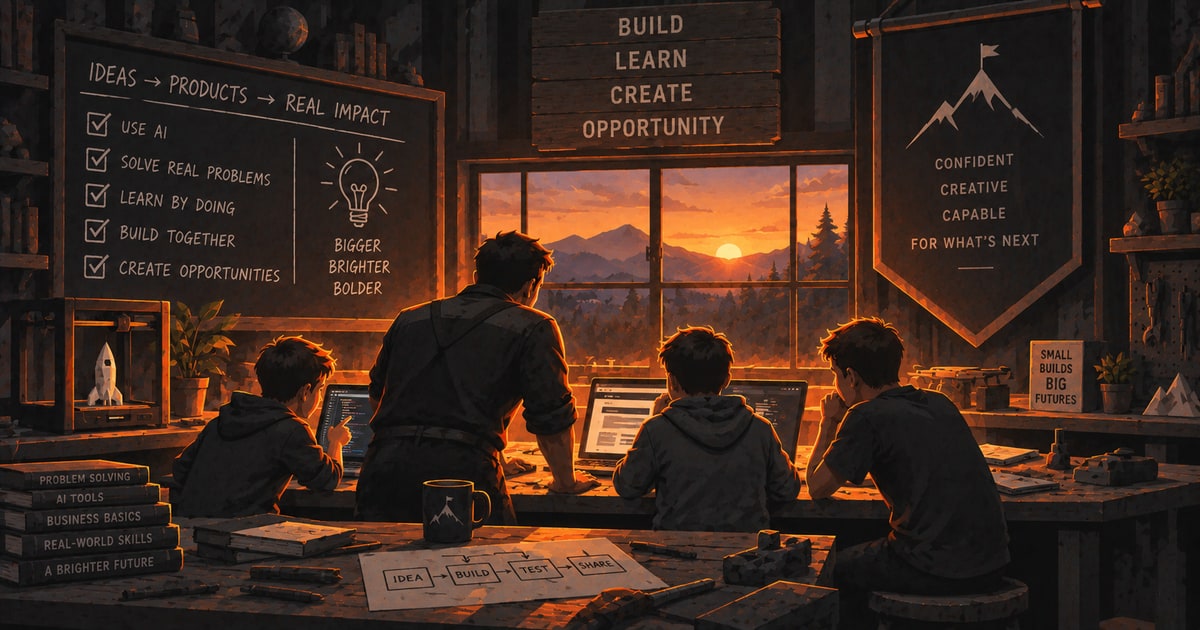
I didn’t set out to build an education product. I set out to leave my kids a path.
A year ago, thinking out loud about what this studio was for, I said something I’ve since had to take seriously: I know how to do this, and there’s a steep learning curve from knowing nothing, like my kids, to where I am. I wanted to leave a pathway from where they are to becoming their own solo tech founders. And I wanted them to be able to walk it while they were still teenagers.
That sentence turned into Make First. This post is about why it looks the way it does.
The gap I was trying to close
School teaches business as a plan. You research a market, write the plan, present the slides, get the grade. I did versions of that myself, and I don’t remember any of them. What I remember is the first time a stranger paid me for something I made.
That’s the gap. Not knowledge. Evidence. A teenager can learn everything about how a business works and still never find out whether they can start one, because nothing in the curriculum requires a stranger to say yes.
There’s good prior work here, and I want to be fair to it. Lemonade Day has taught well over a million kids to “start, own and operate their very own business,” a lemonade stand, and it’s a genuinely good first experience of money changing hands. Junior Achievement’s Company Program has high-school students “conceptualize, capitalize, and manage their own business venture” over nine sessions, with mentors.
If you’re a parent, you’ve probably seen the pattern from the other side: a project that ends at the presentation, a grade that says a lot about effort and nothing about whether anyone wanted the thing. I wanted my kids to find out whether anyone wanted the thing, while the stakes were still low enough that finding out “no” was a good semester rather than a bad year.
What neither is built around, because they predate the possibility, is a teenager building a real product with AI tools and selling it online to someone they’ve never met. That’s a different first, and I think it’s the one that matters now.
Why now, and why AI tools instead of code
Ten years ago, the honest advice to a teenager who wanted to build a software product was “learn to code, and come back in a few years.” Most didn’t come back.
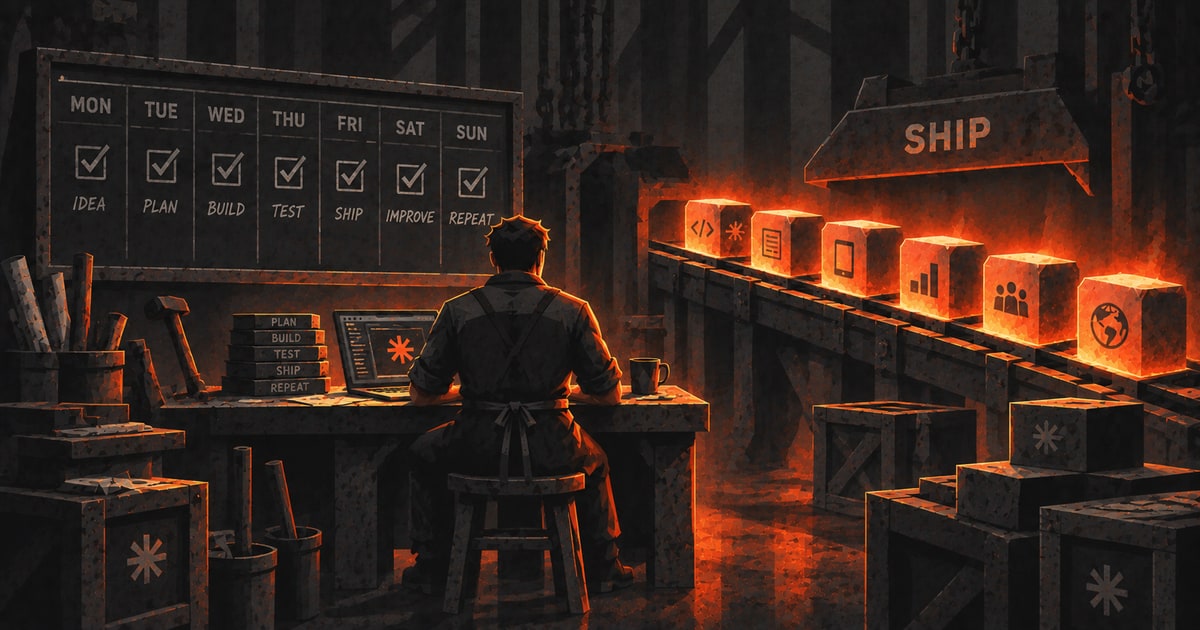
That advice is now wrong. A teenager who can describe a problem clearly, direct an AI tool toward a solution, check whether the result actually works, and put it in front of a stranger can build something real in a semester. Not a demo. A thing someone pays for.
I wrote about the line between a demo and a product in the previous post, and the same line applies here, scaled down. The skill isn’t typing code. It’s directing the tool toward a result and knowing whether you got one. That’s the skill Make First teaches, and it’s why the Academy is about building with AI tools rather than coding. Learning to code is a fine thing to do afterwards. It’s a terrible gate to put in front of a first sale.
The other reason is the one that runs through this whole site: one person plus agents can build and run a real venture. I believe that because I do it. If it’s true for me, it should be teachable to a fifteen-year-old, and if it isn’t teachable, I should find out.
What I actually did first
Before there was a program, there was a kitchen table.
The first version was informal: an idea, a tool, a thing built, and the uncomfortable question of who would pay for it. What I learned quickly was that the building was the easy part. The hard parts were the same ones that are hard for adults: picking a problem someone else actually has, showing it to a stranger, and asking for money. Every place a teenager stalls is a place I’ve stalled.
That’s when the structure of the program became obvious. It needed stages, each one ending at something you can’t fake.
Make First, as it exists
Here’s the program as it’s described on makefirst.ai today. I’m quoting the public version so you can check it.
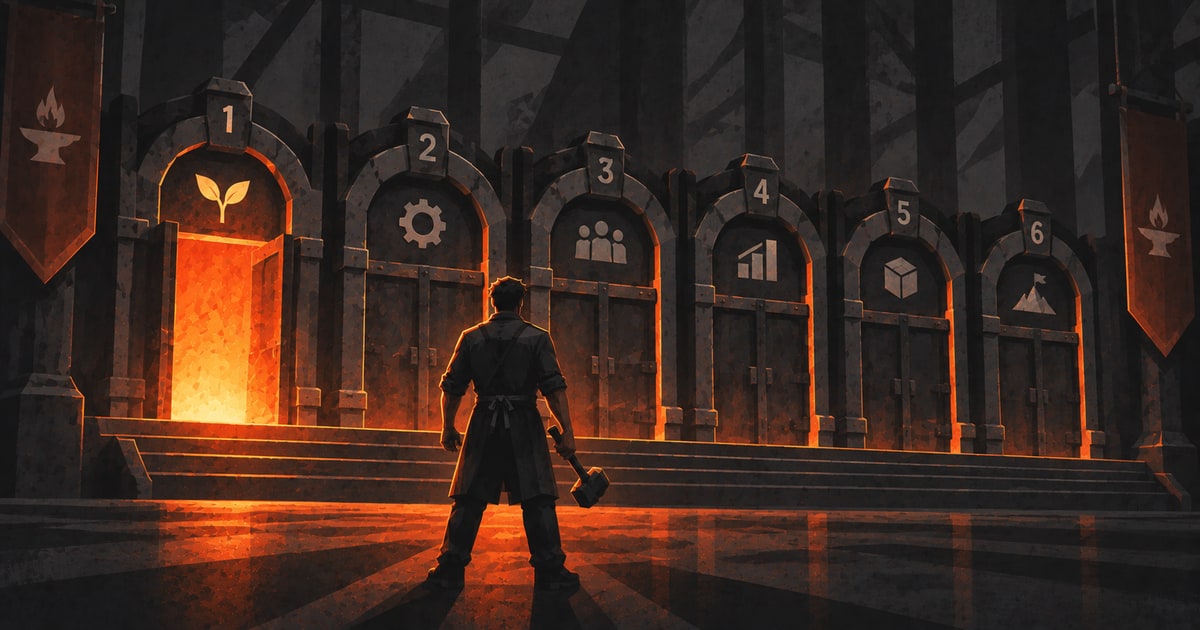
One semester, six stages. Twelve weeks: Spark, Make, Launch, Sell, Grow, Run. Two weeks each.
Every stage ends at a First. First Idea, First Build, First User, First Dollar, First $1K, First $10K. Each one requires evidence: a URL, a stranger’s name, a payment record. Not a plan, not a slide, not a feeling. The gates are pass/fail on purpose. I’ll write about each gate in detail in the next post.
An AI cofounder that coaches instead of doing the work. It’s in private beta. It asks questions, checks whether the gate evidence is real, and unblocks the next smallest step. It never writes the product or the posts. If it did, the student would learn prompting and the evidence would be fake. That constraint was the first design decision, and it’s the one I’d defend hardest.
The Academy. Lessons that teach building with AI tools rather than coding, landing module by module.
Weekly office hours with me. Because the AI cofounder’s job is to get a student to the point where a human conversation is worth having, not to replace it.
Parents are the account holders. These are minors. The program is built with that in mind from the start.
Founding cohort pricing is a one-time fee for twelve months of access, listed on the site. I’m not going to repeat the number here, because numbers on blog posts go stale and the one on the site is the one that’s true.
The design choices I’d defend
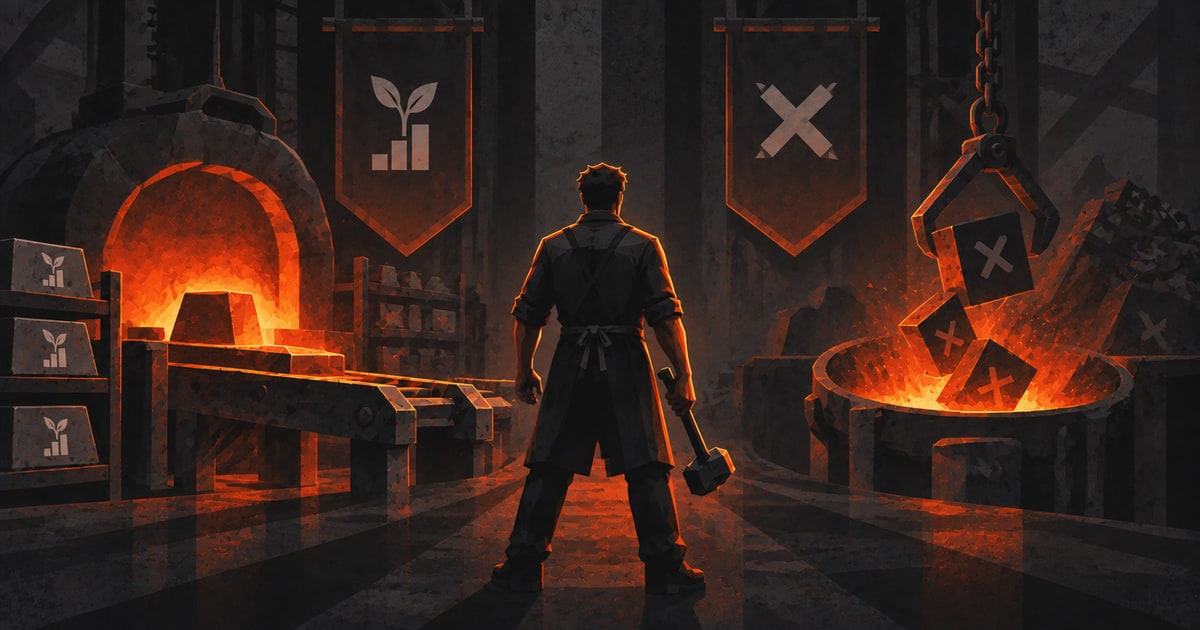
Evidence over effort. A student who works hard and never shows the product to a stranger has not passed Launch. That’s harsh, and it’s the point. Effort is what school grades. Evidence is what a business runs on.
Strangers, specifically. A parent buying the product doesn’t count. A friend doesn’t count. The first sale to a stranger is the only signal that can’t be faked by love.
Run is a stage, not an afterthought. The last two weeks are about automating the repetitive work so the business keeps going when the student’s attention moves on. That’s the Freedom Through Autonomy idea at teenage scale, and I put it in the program because I’ve watched adults skip it for decades.
The AI doesn’t do the work. I keep coming back to this because everyone who hears about the program asks whether the AI just builds the business. No. If it did, we’d be teaching a different thing, and the wrong thing.
Do things that don’t scale. Paul Graham’s essay of that name argues that “the most common unscalable thing founders have to do at the start is to recruit users manually.” The Launch stage is exactly that: go find one person, in person if you have to, and get them to use it. A teenager can do that. Most adults are too embarrassed to.
What this is not
It’s not a coding bootcamp. It’s not a business-plan competition. It’s not a promise that every student ends up with a business; the gates fail people, and a semester that ends at First User instead of First $10K is still a semester in which a teenager built something real and showed it to a stranger.
And it’s not a substitute for the parent. The program gives a teenager a path and a coach. Someone at home still has to say “did you show it to anyone yet?”
If you have a teenager
Applications for the founding cohort are open at makefirst.ai. Read the six stages and the six Firsts before you decide. If your kid reads them and wants to start at Spark, that’s the whole admissions test.
If you’re an adult reading this for yourself: the gates are the same at any age. I’ll go through them one at a time in the next post.
This is the fourth post in the Studio of One series. Previous: What I Ship in a Week With Claude Code. Both learning paths, Make First and The Foundry, are on the Learn page.